
Unit 8
Political, Social and Economic Processes in Ethiopia, Mid-16th to Mid-19th Century
Introduction
- This unit is about the social, economic and political changes, and the things that stayed the same, in Ethiopia between the mid-16th and mid-19th centuries.
- After the Christian Kingdom declined, many groups of people in southern, western, eastern and central Ethiopia built their own local states.
- Political power was spread out across the country.
- The unit also describes changes in the Christian kingdom in this time.
- It recovered from its defeat by the Sultanate of Adal.
- Later it was disturbed by power struggles between regions, known as the Zemene-Mesafent.
- It tried to make its power strong again before falling into chaos in the mid-19th century.
🎯 Learning Outcomes
- Describe peoples and states of Ethiopia from the mid-16th to mid-19th century.
- Explain the major socio-economic and political structure of Ethiopia during the period.
- Explain the major features and achievements of the Gondarine period.
- Identify the main characteristic features of the Zemene-Mesafint and the Yejju Dynasty.
8.1 Peoples and States of the Eastern, Central, Southern and Western Regions
- From the middle of the 16th century to the middle of the 19th century, many peoples of Ethiopia governed themselves.
- Independent states flourished, free from the control of the Christian Kingdom or any other power.
- Still, these states stayed in touch through trade, marriage and conflicts over resources.
- Through these conflicts they either gained land or lost it.
8.1.1 Southern States
✏️ Brainstorming
What does the term Tato mean?
Omotic States and Peoples under the Tato System — Kafa
- The Kingdom of Kafa lay south of Enareya, between the Gojeb and Omo rivers.
- It has been known since at least the end of the fourteenth century.
- This well-watered, forested and fertile region was home to peoples related to the Bench.
- It was ruled by a king with the title Tato.
- His signs of kingship were twelve objects, many made of gold.
- They included a crown in the form of a golden and silver helmet with a triple gold phallus.
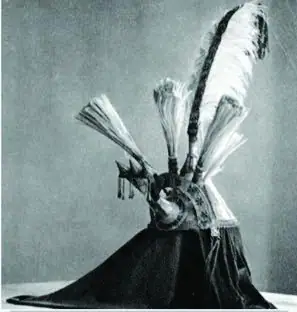
- Kingship was passed on by birth, though not always to the eldest son.
- A council of nobles called Mikkerecho chose the king's successor.
- It also managed regional government and law and order.
- District chiefs wore golden armlets as a sign of office.
- Sub-districts (woraafo) were led by a junior chief, the woraafe rasho, who answered to the king.
- All this shows a highly organised kingdom.
- Bonga was the centre of Kafa, with Anderecha as a second seat to the southeast.
- Kafa stayed independent of the Christian highland state.
- It survived Oromo pressure and cut its earlier ties with the Christian Kingdom.
🔒
The rest of Unit 8 is in the Danulearn app
Read the full notes for all 5 sections, worked examples and figures, plus 20 exercises with step-by-step solutions, the Short Note and the unit review.
📑 Contents
- 8.1Peoples and States of the Eastern, Central, Southern and Western RegionsPreview
- 8.2Gondarine Period🔒
- 8.3The Zemene-Mesafint (The Era of Warlords)🔒
- 8.4The Yejju Dynasty🔒
- 8.5The Kingdom of Shewa🔒
✍️ Practice questions
5 questions from the Unit 8 quiz. Choose an answer, then check it.
- 1
In the Kingdom of Kafa, kingship was hereditary and successors chosen by a council of nobles called:
- AMikkerecho
- BSongo
- CYaa
- DChaffe
Show answer
A Mikkerecho
- 2
Kafa's rulers used the title, adopted from neighboring Enarya, of:
- AMoti
- BKawo
- CWoma
- DTato
Show answer
D Tato
- 3
Which crop is said to have originated in the Kingdom of Kafa?
- Acoffee
- Bsugarcane
- Ccotton
- Dtea
Show answer
A coffee
- 4
Wolaita, Gamo, and Gofa were led by a hereditary king with which title?
- AKati
- BWoma
- CTato
- DKawo
Show answer
D Kawo
- 5
The Dawuro and Konta peoples used which royal title?
- AKawo
- BKati
- CWoma
- DTato
Show answer
B Kati