
Africa and the Outside World, 1500–1880s
- This unit is about Africa's contact with the outside world.
- It looks mainly at the contacts of the Western and Central African coasts with the European powers.
- It also explains slavery and the Trans-Atlantic Slave Trade: how it began, its phases and its effects.
- Finally, it looks at the “legitimate” trade, the settlement of white people in South Africa, and the European explorers and missionaries.
- Evaluate the nature of the relationship between Africans and Europeans during the period.
- Analyse the political, social, and economic impacts of the Trans-Atlantic Slave Trade.
- Examine the living conditions of African people during the Trans-Atlantic and Trans-Saharan slave trades.
- Compare and contrast the consequences of the Trans-Atlantic Slave Trade on Africa.
- Explain the motives of white settlers in southern Africa during the period.
What do you think about African relations with the rest of the world?
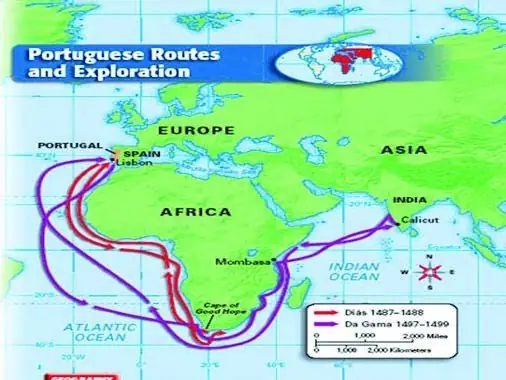
- Portugal was the European country that first made contact with the coastal regions of West Africa.
- When the Portuguese first sailed along the West African coast to explore, their far-away goal was to reach India.
- Their goal at that time was to go around Muslim North Africa and reach the gold-producing region of West Africa directly.
- This gold would give them a major source of national wealth to pay for more exploration and discovery.
- Henry the Navigator, the Portuguese prince, paid for Portuguese exploration of Africa mainly for two reasons.
- He wanted to spread Christianity and to make Africa a stronghold of Christianity against the Ottoman Empire.
- He also wanted to make trade links with Africa.
- If the Portuguese held land in Africa, they could use African gold to pay for travel along new trade routes.
- Safe passage through Africa could also open the whole Indian Ocean to direct Portuguese trade.
- Ceuta was the first step in Portuguese expansion along the Atlantic coast.
- In 1415 King João I (John I) and his sons led an expedition to conquer Ceuta.
- It lay across the Straits of Gibraltar on the coast of North Africa, in today's Morocco.
- The Portuguese stayed in this part of Morocco from 1415 to 1769.
- It was a long time of constant war, because people never accepted their presence.
Read the full notes for all 5 sections, worked examples and figures, plus 11 exercises with step-by-step solutions, the Short Note and the unit review.
📑 Contents
- 6.1Contact with the Outside WorldPreview
- 6.2Slavery🔒
- 6.3The “Legitimate” Trade🔒
- 6.4The White Settlement in South Africa🔒
- 6.5European Explorers and Missionaries🔒
✍️ Practice questions
5 questions from the Unit 6 quiz. Choose an answer, then check it.
- 1
Portugal's primary immediate goal in exploring the West African coast was to:
- Afind a route to South America
- Bestablish colonies in Asia only
- Cbypass Muslim North Africa and access West African gold
- Dconvert all of Europe to Christianity
Show answer
C bypass Muslim North Africa and access West African gold
- 2
Ceuta, the first step in Portuguese expansion in 1415, was located near the:
- AStraits of Gibraltar
- BCape of Good Hope
- CHorn of Africa
- DNile Delta
Show answer
A Straits of Gibraltar
- 3
The Portuguese built their first permanent trading post, the Castle of Elmina, in 1482 on the coast of present-day:
- ASenegal
- BAngola
- CGhana
- DNigeria
Show answer
C Ghana
- 4
The Portuguese permanently lost the Gold Coast in 1642 to which rival power?
- Athe Spanish
- Bthe British
- Cthe French
- Dthe Dutch
Show answer
D the Dutch
- 5
The Trans-Atlantic slave trade is also known as the:
- ATriangular Trade
- BPiratic Trade
- CLegitimate Trade
- DContinental System
Show answer
A Triangular Trade