
Peoples and States in Ethiopia and the Horn to the End of the 13th Century
- Ethiopia and the Horn of Africa are seen as the cradle of humankind and of civilizations.
- These developments shaped the social, cultural, economic and political life of the peoples here.
- This unit briefly describes the languages, religions and settlement patterns of the peoples of Ethiopia.
- It shows that Ethiopia is home to many different peoples and cultures.
- It also follows the history of the states that appeared in the region up to the 13th century.
- In this time dynasties rose and fell one after another.
- The Zagwe dynasty replaced the Aksumite dynasty in northern Ethiopia in 1270 AD.
- In the southern half of the country, the Makhzumite dynasty of the Sultanate of Shewa was followed by the Walasma dynasty of the Ifat sultanate in 1285 AD.
- Differentiate the main language super-families of Ethiopia and the Horn.
- List the major religions of Ethiopia and describe their introduction and expansion.
- Examine the nature of interaction among different peoples of Ethiopia to the end of the 13th century.
- Analyse the major achievements of the Pre-Aksumite states and the Aksumite kingdom.
- Evaluate the success and failure of the Zagwe Dynasty and the Sultanate of Shewa.
- Ethiopia and the Horn of Africa have many different ethnic groups and languages.
- People in the Horn of Africa speak more than 80 languages, with many dialects, and follow different religions.
- Yet there is strong unity beyond this diversity.
What do you know about the major language families of Ethiopia from your lower grade?
- Language experts put the languages of Ethiopia and the Horn into two big superfamilies: Afro-Asiatic and Nilo-Saharan.
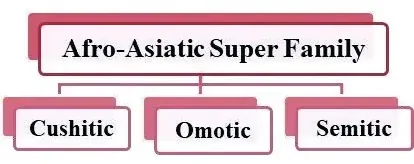
- The Afro-Asiatic superfamily is divided into the Cushitic, Semitic and Omotic language families.
- The Nilo-Saharan superfamily is divided into two families: Chari-Nile and Koman.
- Most people in Ethiopia speak a Cushitic language.
- It has three sub-groups: North, Central and Eastern Cushitic.
- North Cushitic is spoken only by the Beja people in northwestern Eritrea.
- Central Cushitic is spoken by Bilen in Eritrea and by the Agaw languages (Qimant, Himitagna and Awign) in Ethiopia.
- Eastern Cushitic is the largest and most varied branch.
- Its Lowland groups include Oromo, Afar, Somali, Konso, Gidole, Erbore, Dassenech and Saho.
- Its Highland groups include Hadiya, Kambata, Tambaro, Halaba, Sidama, Gedeo and Burji.
- Southern Cushitic is spoken by Dhalo in Kenya and Nbugua in Tanzania.
- Semitic has a Northern and a Southern branch.
- Northern Semitic includes Ge'ez, an ancient language of northern Ethiopia.
Read the full notes for all 5 sections, worked examples and figures, plus 11 exercises with step-by-step solutions, the Short Note and the unit review.
📑 Contents
- 3.1Languages, Religions and Peoples of Ethiopia and the HornPreview
- 3.2The Pre-Aksumite States and their Geographical Setting🔒
- 3.3Aksumite Kingdom🔒
- 3.4Zagwe Dynasty🔒
- 3.5The Sultanate of Shewa🔒
✍️ Practice questions
5 questions from the Unit 3 quiz. Choose an answer, then check it.
- 1
Linguists classify the languages of Ethiopia and the Horn into which two major superfamilies?
- AAfro-Asiatic and Nilo-Saharan
- BIndo-European and Semitic
- CBantu and Khoisan
- DCushitic and Niger-Congo
Show answer
A Afro-Asiatic and Nilo-Saharan
- 2
Which is the largest and most diverse branch of Cushitic languages in Ethiopia?
- ACentral Cushitic
- BNorth Cushitic
- CSouthern Cushitic
- DEastern Cushitic
Show answer
D Eastern Cushitic
- 3
Ge'ez is classified under which language branch?
- ANorthern Semitic
- BOmotic
- CNilo-Saharan
- DSouthern Cushitic
Show answer
A Northern Semitic
- 4
Most Omotic language speakers live in and around which river basin?
- Athe Tekezze River
- Bthe Blue Nile
- Cthe Awash River
- Dthe Omo River
Show answer
D the Omo River
- 5
The Waqeffanna religion of the Oromo centers on one Supreme Being called:
- AAyyana
- BQallu
- CWaqa
- DSinqe
Show answer
C Waqa