
Unit 5
Information and Computer Security
Unit Overview
- As Unit 2 showed, computer networks and the Internet have transformed our lives in many good ways.
- Unfortunately, these vast networks and the technologies around them have also brought an increasing number of security threats.
- This unit introduces the computer security attacks you could meet in the connected world, the impacts they can cause, and the actions you can take to avoid them or to minimize their impact.
🎯 Learning Outcomes
- Explain computer and information security.
- Explain confidentiality, availability and integrity of an information system.
- Discuss computer security threats.
- Explain basic security threats and prevention strategies.
- Evaluate confidentiality, availability and integrity of a school-based information system.
5.1 Definition of Security
- Security is the quality or state of being secure.
- It can mean freedom from danger, which is related to safety, or freedom from fear or anxiety.
- It also means protection: the measures taken to guard against sabotage, crime, attack or escape.
- This last definition is the proper one from the institutional and business point of view.
Remember: Ethiopia has a federal institution called the Information Network Security Agency (INSA). It was established to protect the national interest by building the capability to safeguard the country's information and information infrastructures. It is a national security agency with a mission on cyber security.
Definition: Computer security — The protection of computer systems and information from harm, theft and unauthorized use. It is also the process of preventing and detecting unauthorized use of a computer system.
- What is unauthorized use?
- You may use your textbook in class and when you study, but not during an examination: then you are unauthorized to use it.
- In the same way, a person may be authorized to use a computer system for some purposes and not for others.
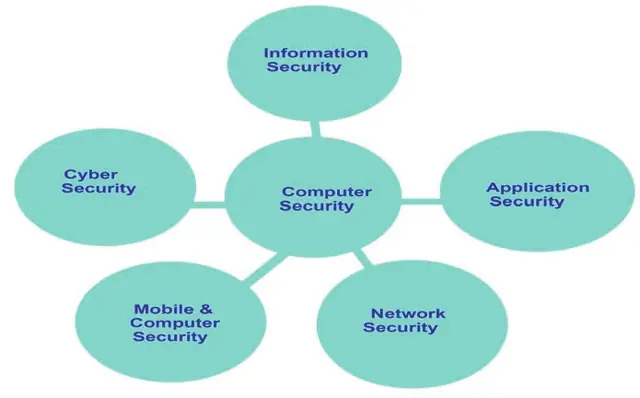
| Type | What it secures |
|---|---|
| Information security | Information, from unauthorized access, modification and deletion; for example, your marks on the homeroom teacher's laptop |
| Application security | An application, by building in security features against cyber threats; for example, a spreadsheet that holds payroll or marks |
| Mobile and computer security | Handheld devices and standalone machines, by keeping them updated and patched |
| Network security | Both the software and the hardware technologies of a network; a firewall protects a network from Internet-based attacks |
| Cyber security | Computer systems that communicate over computer networks |
The 90/10 rule
🔒
The rest of Unit 5 is in the Danulearn app
Read the full notes for all 5 sections, worked examples and figures, plus 6 exercises with step-by-step solutions, the Short Note and the unit review.
📑 Contents
- 5.1Definition of SecurityPreview
- 5.2Principles of Computer Security🔒
- 5.3Computer Security Threats🔒
- 5.4Potential Losses Due to Security Attacks🔒
- 5.5How to Secure Yourself and Your Computer Systems🔒