
Unit 1
Information Systems and Their Applications
Introduction
- Information systems now reach far beyond business.
- Every new technology changes how people behave and gives us abilities we did not have before, and with those abilities come situations that our rules of right and wrong were never written for.
- A responsible user therefore has to think about two things at once: the consequences of how information systems are used and accessed, and the rights of the people who create and invent.
This unit covers the ethical, legal, social, environmental and health issues that come with information systems, the basics of intellectual property rights, digital identity management, collaboration through digital technologies, and how digital technologies let citizens take part in the life of their community and country.
🎯 Learning Outcomes
- Explain ethical and legal issues in information systems.
- Explain environmental, health and social issues in information systems.
- Recognize the basics of intellectual property rights.
- Describe digital identity management.
- Appreciate the role of digital technologies in citizenship.
1.1 Ethical, Legal, Social, Environmental and Health Issues in the Use of Information Systems
- New technologies, information systems among them, shape how we live, work and learn.
- As their use grows, so do the consequences, and every user needs to be aware of them.
- Knowing the issues and using information systems properly is part of becoming a responsible member of a knowledge-based, technology-led society.
1.1.1Ethical and Legal Issues in Information Systems
- Ethics is about the principles we use to decide what is right and what is wrong.
- It is the discipline concerned with what is morally good and bad.
- Ethical principles are meant to be respected, and when breaking them also breaks the law, there are legal consequences.
- Doctors, teachers, government officials and business people all work under legal and ethical oversight.
- Information systems change so fast that settled standards often lag behind the technology, which makes the user's own judgement more important.
The main ethical and legal issues in today's digital world concern privacy, digital ownership, information gathering, and information security and liability.
Privacy
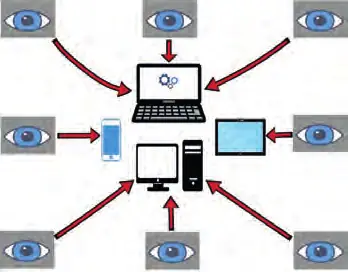
- Information privacy concerns the personal data stored on computer systems.
- Most people have data spread across many digital systems, and private information should be reached only with the owner's password.
- Email, social media and bank accounts can nevertheless be accessed by unauthorized people, which is both an ethical and a legal problem.
- Looking at someone's private information without permission is morally wrong and may be a crime.
- Even an organization that monitors how its employees use computers must do so without damaging individual privacy.
Digital ownership
- This is the ability to access, use and protect data, information and knowledge about ourselves or the things we own.
🔒
The rest of Unit 1 is in the Danulearn app
Read the full notes for all 5 sections, worked examples and figures, plus 9 exercises with step-by-step solutions, the Short Note and the unit review.
📑 Contents
- 1.1Ethical, Legal, Social, Environmental and Health Issues in the Use of Information SystemsPreview
- 1.2Intellectual Property🔒
- 1.3Digital Identity Management🔒
- 1.4Collaboration Through Digital Technologies🔒
- 1.5Engaging in Citizenship Through Digital Technologies🔒