
Unit 2
Emerging Technologies
Introduction
- An emerging technology is a technology that is developing and evolving fast and has a prominent social and economic impact.
- This unit covers four of them: artificial intelligence, augmented reality, virtual reality and data science.
- For each one it explains what the technology is, how it works and where it is being applied.
🎯 Learning Outcomes
- Explain emerging technologies.
- Define artificial intelligence and state its branches.
- Describe common applications of artificial intelligence.
- Differentiate the concepts of augmented reality and virtual reality.
- Describe data science and its applications.
2.1 Artificial Intelligence
- Artificial intelligence (AI) is the branch of computer science that deals with the design of systems that mimic human intelligence.
- AI systems are designed to have abilities that only humans have, such as reasoning and generalization.
- Reasoning: “My friend is either at home or at her workplace. She is not at her workplace. Therefore she is at home.”
- Generalizing: applying past experience to a new problem of the same kind. “I know how to change the wheel on my bicycle, so I can change the wheel on my friend's bicycle.”
- The history of AI goes back to the 1940s, and the term itself was coined in the 1950s.
- AI is popular and powerful today mainly because computer capacity has grown enormously and very large amounts of data are available.
- AI algorithms are used widely in business, medicine and entertainment.
2.1.1Branches of AI
There is no single fixed way of dividing AI into subfields, but the following four are generally treated as its branches.
Machine learning
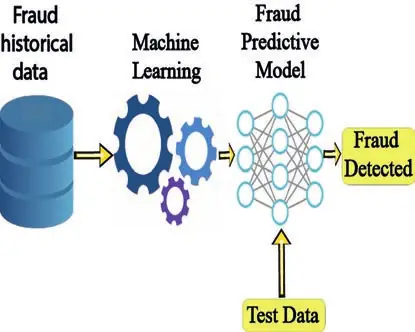
- Machine learning is the study of computer algorithms that enable a computer to learn from data and improve itself without being explicitly programmed.
- A conventional algorithm follows explicit instructions.
- A machine learning algorithm instead trains on sample data.
- The model built from that data is then used to make predictions that support decisions.
- Fraud detection, recommendation systems, email spam detectors and speech recognition are applications of machine learning.
Robotics
- Robotics is the study of machines called robots that take over tasks traditionally done by human beings.
- For decades robots have replaced human labour in routine work such as car assembly lines.
🔒
The rest of Unit 2 is in the Danulearn app
Read the full notes for all 3 sections, worked examples and figures, plus 8 exercises with step-by-step solutions, the Short Note and the unit review.
📑 Contents
- 2.1Artificial IntelligencePreview
- 2.2Augmented Reality and Virtual Reality🔒
- 2.3Data Science🔒