
Africa Since 1960
- Unit 7 covers the history of Africa since the 1960s.
- The year 1960 is often called the Year of Africa, because more than a dozen African countries became independent in that year.
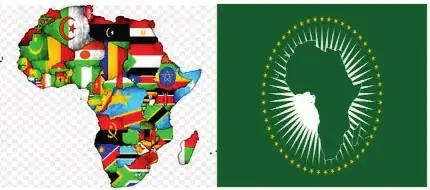
- In this unit you will study the national liberation movements in North, West, East and Central, and Southern Africa, Pan-Africanism and the formation of the Organization of African Unity (OAU) and its replacement by the African Union (AU), the struggle for economic independence and regional integration, and the major contemporary issues of Africa, such as ethnic conflict, poverty, population growth, disease and climate problems.
- Compare and contrast the different forms of national liberation struggles in Africa.
- Appreciate the struggle of Africans for political independence.
- Outline the major socio-economic problems of independent African nations since the 1960s.
- Evaluate the successes and limitations of African regional economic integration.
What does national liberation movement mean?
Who were the ringleaders of national liberation movements in Africa?
- The first breakthrough towards independence came in North Africa, led by Egypt, a protectorate of Great Britain from 1882.
- Soon after the end of World War I, a delegation of Egyptian nationalists led by Saad Zaghlul asked the British High Commissioner to end the British protectorate in Egypt and Sudan.
- The request was followed by demonstrations and strikes across Egypt by students, the elite, civil servants, merchants, peasants, workers and religious leaders.
- As a result of the popular uprising, London issued a unilateral declaration of Egyptian independence on 22 February 1922.
- Some decades later, the Kingdom of Libya won its independence from Italy, under UN trusteeship (British administration), on 24 December 1951.
- After the Egyptian Revolution of 1952, which overthrew the unpopular government of King Farouk, the demand for the withdrawal of British forces from all of Egypt and Sudan grew stronger.
- Muhammad Naguib, one of the two co-leaders of the revolution with Gamal Abdel Nasser and Egypt’s first president, made Sudanese independence a priority.
- On 1 January 1956 the Anglo-Egyptian Condominium over Sudan ended and Sudan became independent.
Read the full notes for all 3 sections, worked examples and figures, plus 15 exercises with step-by-step solutions, the Short Note and the unit review.
📑 Contents
- 7.1Rise of Independent States in AfricaPreview
- 7.2Struggle for Economic Independence🔒
- 7.3Major Issues in Contemporary Africa🔒
✍️ Practice questions
5 questions from the Unit 7 quiz. Choose an answer, then check it.
- 1
Egypt achieved a unilateral declaration of independence from Britain in:
- A1912
- B1922
- C1952
- D1956
Show answer
B 1922
- 2
The first sub-Saharan African colony to gain independence was:
- AGhana (Gold Coast)
- BKenya
- CCongo
- DNigeria
Show answer
A Ghana (Gold Coast)
- 3
Ghana's independence in 1957 was achieved under the leadership of:
- AKwame Nkrumah
- BJomo Kenyatta
- CJulius Nyerere
- DPatrice Lumumba
Show answer
A Kwame Nkrumah
- 4
Algeria's independence war (1954–62) was led by the:
- ASWAPO
- BNational Liberation Front (FLN)
- CZANU
- DCasablanca Group
Show answer
B National Liberation Front (FLN)
- 5
Which African leader was assassinated in 1961 with U.S. and Belgian involvement?
- APatrice Lumumba
- BKwame Nkrumah
- CJulius Nyerere
- DJomo Kenyatta
Show answer
A Patrice Lumumba